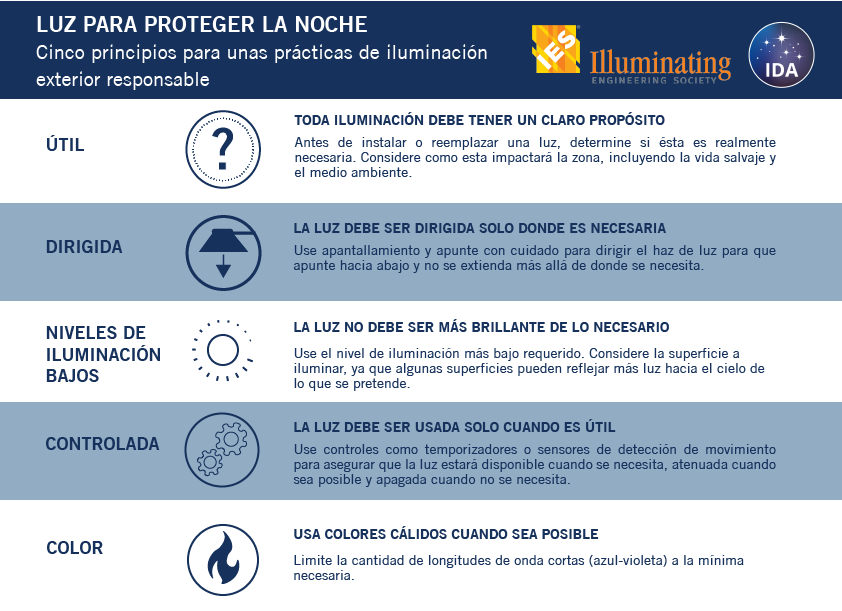
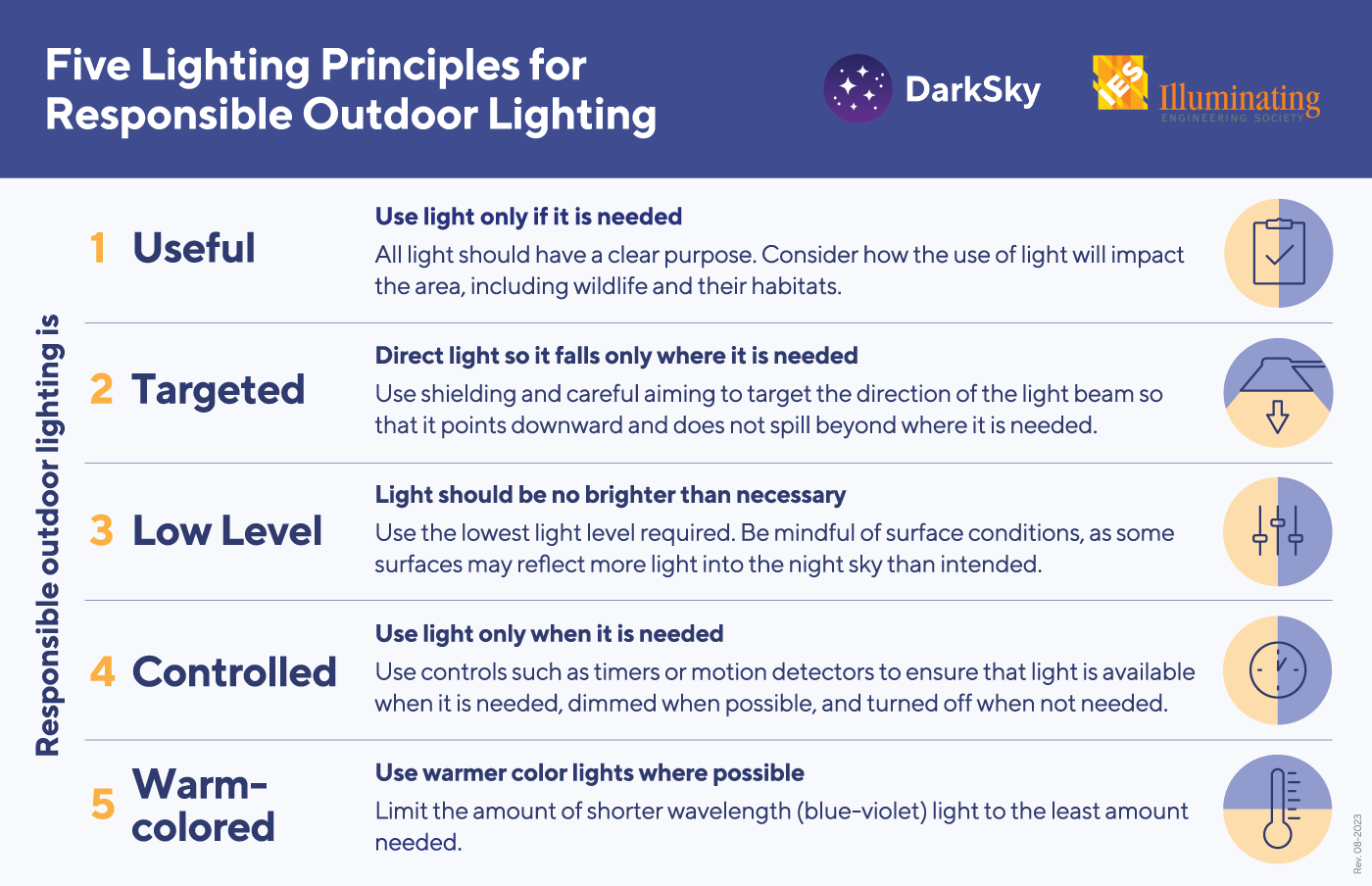
HOW TO IMPROVE YOUR LIGHTING
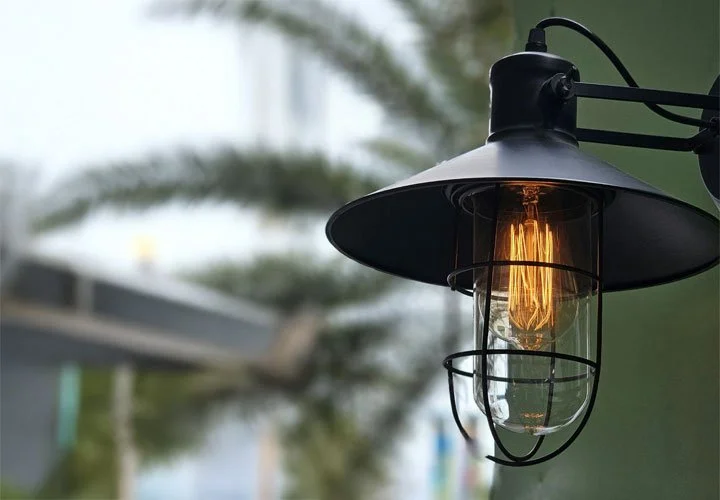
To get started, perform the Home Outdoor Lighting Assessment for your home using the linked guide created by the DarkSky.org
If your lighting is already Dark Sky Friendly…Thank You and enjoy the night view!
If your assessment identifies opportunities to improve your lighting, continue below for suggestion on new Dark Sky Compliant Fixtures and techniques to help your existing fixtures become more Dark Sky Friendly.
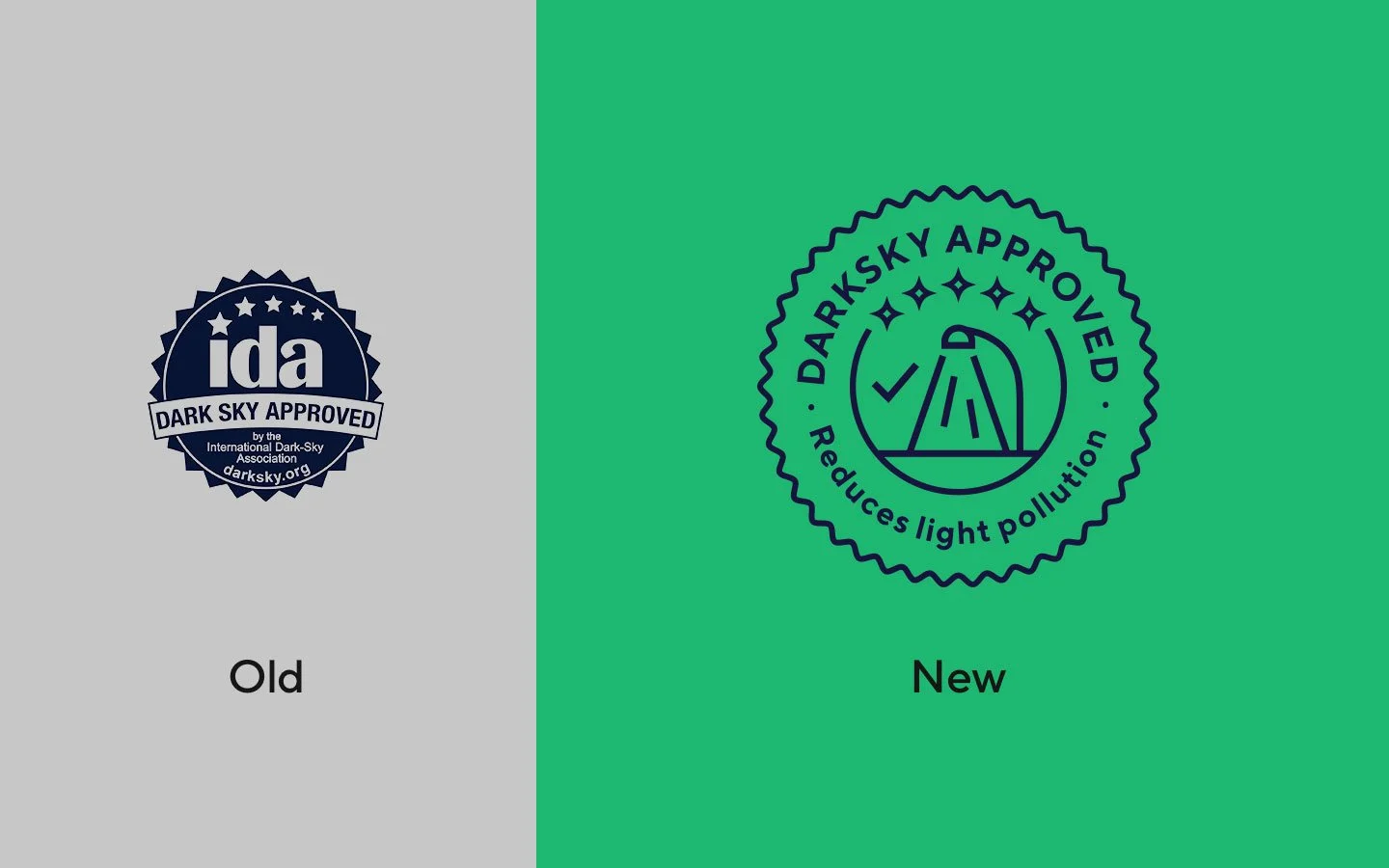
The new DarkSky Approved logo was adopted in 2022.
Selecting new Dark Sky Approved Outdoor Lights
If replacement or new outdoor lighting is needed. You can find Dark Sky Approved Luminaires/Fixtures from the “Search DarkSky” link below. Select the “Residential” button to filter selections, and you may also filter search based on fixture type, style, finish, etc.
Note there are other Dark Sky “Friendly” Fixtures that meet the principles of Dark Sky outdoor lighting without being “Dark Sky Approved Luminaires”, however approval removes any uncertainty of compliance with the principles.
You can also look for the DarkSky Approved Logo below on fixtures at your local lighting supply and hardware stores for more options. The DarkSky Approved seal tells you a luminaire or device has passed certification by DarkSky’s technical lighting team.
Simple Tricks to Be More Dark Sky Friendly
If replacement with “Dark Sky” approved or Dark Sky friendly fixtures/luminaires is not possible. Consider changing the bulb(s) or modifying your existing fixtures to be more “Dark Sky Friendly”. These methods may not satisfy the all principles of Dark Sky Lighting, but may improve your lighting situation. Techniques for improving existing fixtures can include one or more of the following:
(WARNING: never work on any lighting circuit or fixture without first disconnecting power and using a qualified electricians where needed)
Changing the bulb(s) to the preferred 2700K or less color and an 800 lumen or less total fixture brightness.
Use smaller bulbs which can “hide” within the fixture shade.
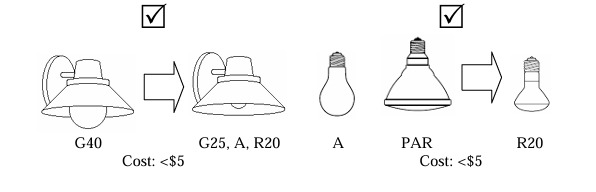
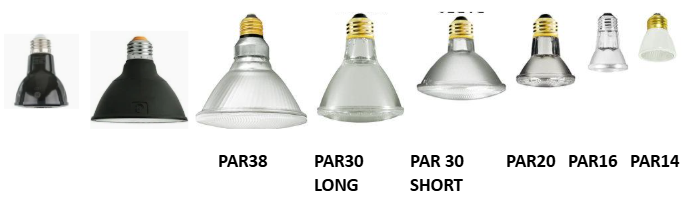
Replacing A19 style bulb with a downward facing PAR or similar bulb with a 2700K or lower color and a 800 lumen or lower brightness. PAR bulb direct their light in a focus flood or spot pattern, greatly reducing stray light.
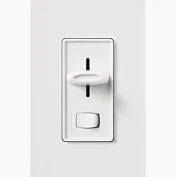
Adding a light switch dimmer to reduce the light level to below Dark Sky recommendations. Some smart outdoor fixtures can now dim automatically when no motion is detected.
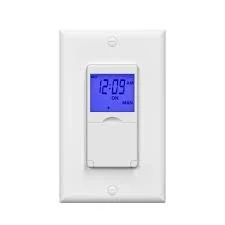
Adding a timer switch to the light switch to turn off lights later in the evenings when no longer needed.
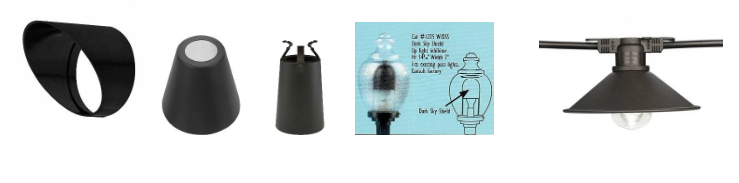
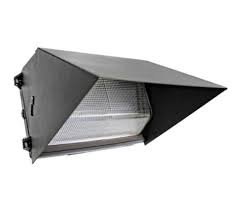
Add a purchased or DIY non-flammable opaque light shield to wall fixtures, floodlights, string lights, etc. to reduce glare, upward light, and light trespass.
Paint clear glass fixture panes black to block upward or glaring light.
Adding a motion sensor or motion sensing fixture to active light only when needed. This is especially important for flood lights.
Properly aim and add shields to PAR Floodlight to point downward and avoid glare and light trespass beyond your property.
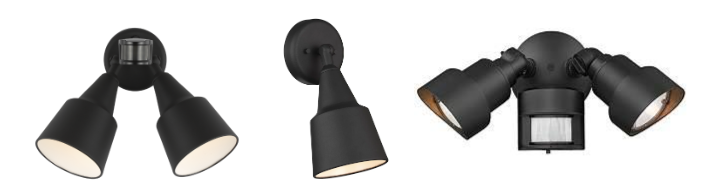
Unscrew extra bulbs in overly bright multi-bulb fixtures to reduce brightness.
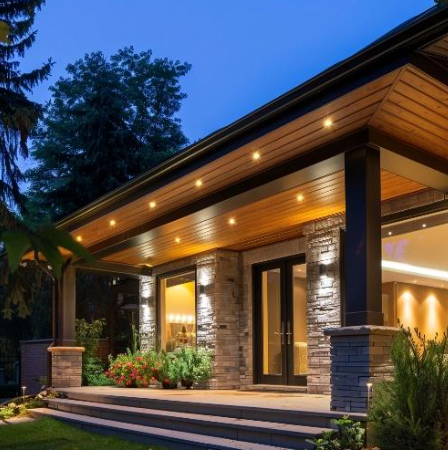
Use recess under eaves lights in lieu of wall lights.
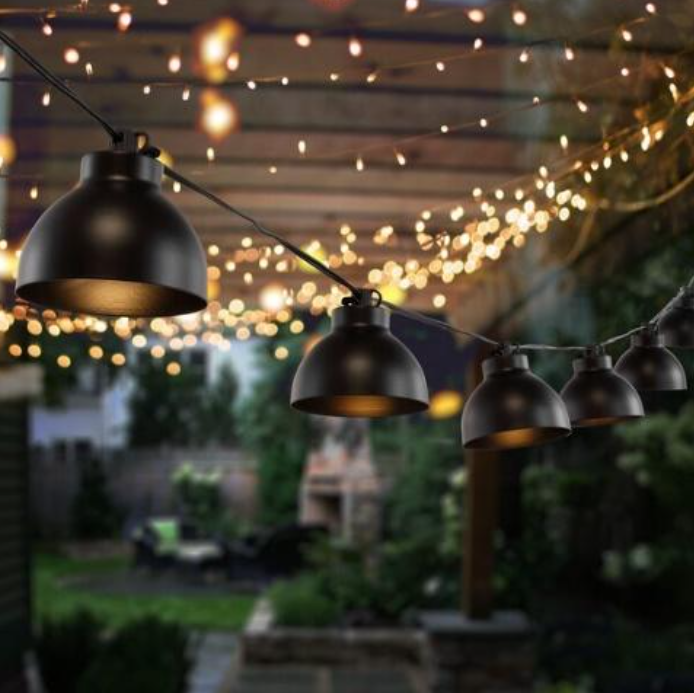
Mount String or Bistro lights under a canopy or other existing structure. The lights should be mounted at least a foot away from the edge, and recessed high enough up that their light is not going directly into the sky.
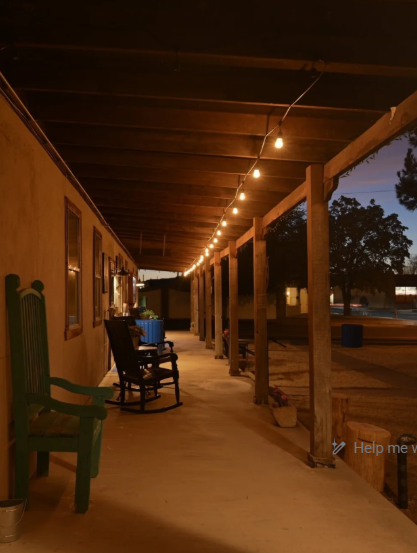
Add bulb shades, dimmer switch, and/or timer to String or Bistro lights that do not come with shades and cannot be mounted under structures.
Add shields to Wallpack & Wall mounted fixtures to prove a light cutoff.
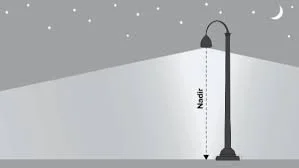
Ensure all fixture lights do not shine above 90 degrees from Nadir. “Nadir” is a downward vertical vector directly beneath a luminaire. Remember, If you can see the bulb directly from the side, It’s not shielded or Dark Sky Friendly.
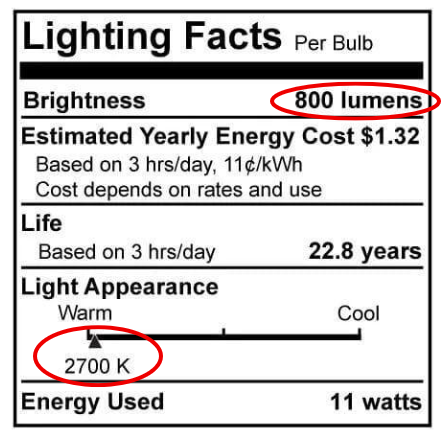
Understand Bulb Lighting Facts Labels
When purchasing bulbs, look for the standardized “Lighting Facts” label (shown below) on the box. A Lighting Facts label is a mandatory information panel found on light bulb packaging in the United States to help consumers understand the characteristics of the light bulb(s).
For Residential Outdoor Fixtures/Luminaires to be Dark Sky compliant look for the preferred levels of Brightness and Color indicated below (or less) for your home outdoor bulbs and light fixtures.
“Lumens” is a standard unit of measure for light brightness, intensity, or output. “Light Appearance” or “Light Color” is a standard measure by light temperature in degrees Kelvin (K).
Dark Sky Levels
Bulb Brightness
1000 lumens Maximum
800 lumens or less is preferred, 500 lumens is ideal*
Light Appearance/Color
3000K Maximum
(Soft White/Amber)
2700K or less is preferred, 2200K is ideal
* Brightness limit of 1000 lumens is for the total of all bulbs in a fixture.
Understand Bulb Light Color
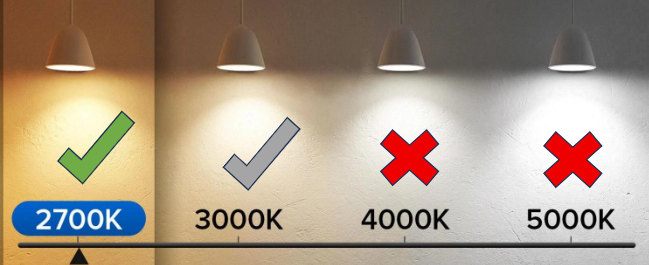
Bulb and Fixture Light Color is measure in degrees Kelvin (K). The higher the degrees, the whiter the light. The lower color temperatures are softer more amber light which is closer to candlelight and are best for Dark Sky. The whiter the light, the more of the undesirable blue spectrum is included. The invisible blue light spectrum included in Whiter and Cooler light colors adds to “Sky Glow” and interferes with circadian rhythms and wildlife behaviors.
Light Colors less than or equal to 3000K maximum are needed for Dark Sky Compliance. Light color bulbs of 2700K are a better color and are readily available in most lighting and hardware stores.
The ideal light color for Dark Sky is 2200K, but these are commonly associated with “Bug Lights” and may have limited availability and bulb type selection. The light temperature in degrees Kelvin has no relationship to the actual surface temperature of the bulb.
* WHERE AVAILABLE AMBER “BUG LIGHT” BULBS (2200K) ARE THE BEST COLOR FOR DARK SKY